HOW TO START AND STEWARD A SUCCESSFUL HOME DESIGN PROJECT
Updated: Sep 13
The one question I really empathize with all the time when a new prospect calls is: "How do I start to design & steward a successful home design project, why am I stuck and why is this so overwhelming?
And I love these conversations because I have my own design fail stories and because they reveal more than a wish list of furniture items - They TELL me the client is ready to cut through the confusion and start designing a home based on how a family really wants to live.
And I can personally relate because this first step using forward thinking and clarity is exactly what I wished I had known before I pushed forward trying to figure it out by myself, on my own design project (read about that here)
The reason you're stuck or frustrated starting your design project isn't because you're bad at it. It's because you're trying to make a thousand decisions without any guardrails. When designing a home, it’s natural to start "with what do I find beautiful" - but beauty without boundaries can be a prison instead of a pathway.
Today, smart homeowners realize that people who start their interior design project with clarity - knowing who they are, where they're going and what they stand for, start their project from a position of strength and authority. They want deeper, meaningful, lasting results - they want to design a home that resists trends, stands the test of time and supports their inspired perspectives for living well.
But beginning a room design project without spiraling while translating ideas can quickly become problematic.
So, today, I want to walk you through the behind the scenes process that shapes the design direction so you can define success on your own terms and step into the authority God gave you over the most important ground He ever placed under your feet - your home!
I call this investigative, experiential and intentional design because it's moves more like the scientific method and lays the groundwork for a finished room that feels deeper than surface beauty - it feels comfortable, tailored and authentic.
Because while beauty inspires, data informs and confidence comes from having a strategy so you can pull it all together in a way that makes sense to your authenticity while improving the way you live.
So instead of starting by asking, "what do you love" or falling down the black hole of collecting random inspirational photos of beautiful homes and furniture, start with thoughtful planning and strong foundations by asking the right questions - like: "how do I make this space work better to facilitate how I actually want to live, why is this important and who will benefit?" 1 Peter 3:15 challenges us to always be prepared to give an answer for the hope that is within us to anyone who asks. This requires some forward thinking and consideration.
Inspirational photos bridge the gap between your abstract ideas and the reality of your space. They act as a safety net to communicate what you need & expect while working with others by establishing protective design boundaries to prevent costly miscommunications before signing contracts, spending time in high pressure sale meetings or making purchases. BUT - ideas and inspiration that won't work or aren't 'testable' are useless 'data' and a waste of time & resources.
Most rooms feel 'off' long before the furniture is added because mistakes were made by 'guessing' instead of planning & developing the best idea.
Color palettes, shades and tones help lay the groundwork for everything that comes into the room but choosing the wrong color without knowing why it is perfect for your space, can throw off the entire room.
So, If you want your home to feel tailored, intentional & set apart yet pulled together, start by assessing design details like an interior designer and ask why is this perfect for my space and then translate your data into a collection of expectant visual references so you can effectively communicate the hope within you by inventing your own signature design aesthetic..
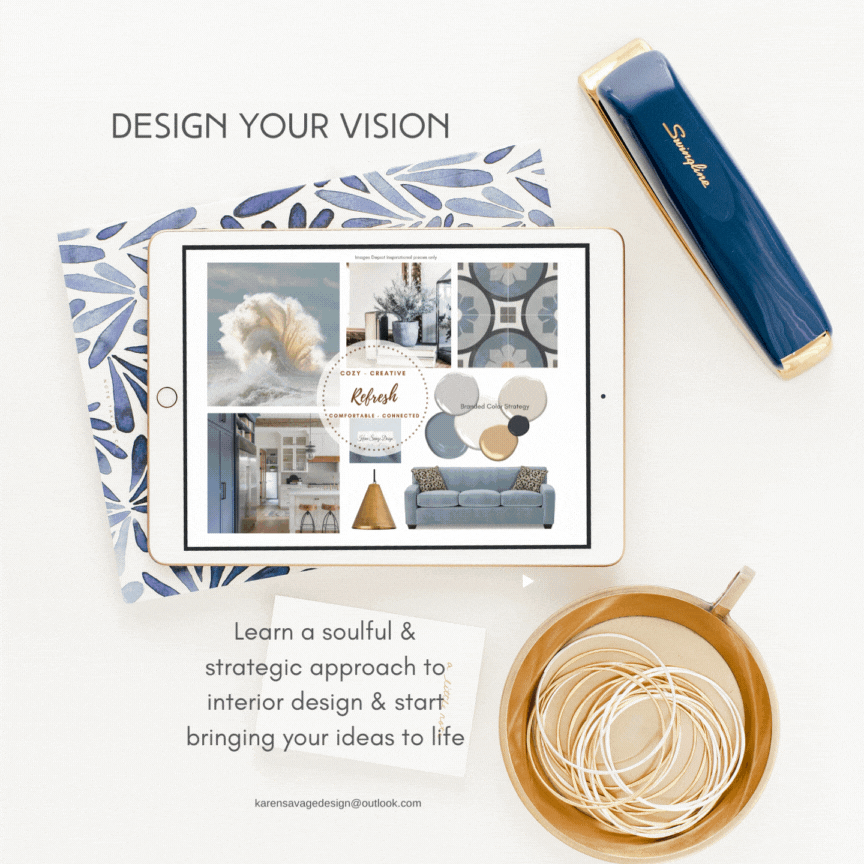
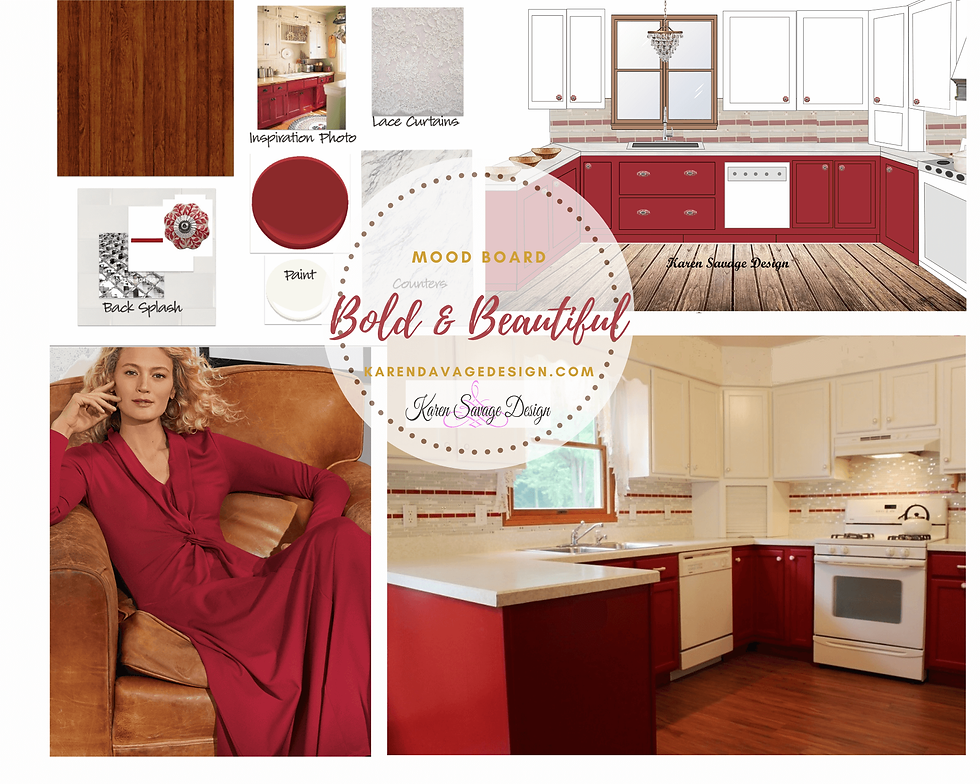
If you've found yourself noticing spaces that aren't working as well as they should be and have been going back and forth on ideas and can't commit, this information and the twelve Foundational Design Boards by Color Palette I've included in this post, will help get you unstuck and move your project forward.
Or you can create your own Initial Foundational Design Direction Concept Board using your own key design drivers and the tips and investigative questions I've included in this blog post and then let your visuals start doing the real work for you.
After you translate all your ideas into key design drivers, arrange them together for testing & analysis of cohesion, balance, authenticity and tone and edit as necessary to prioritize & improve the desired outcome and affect. Doing this also helps train your eye to see better combinations and create better compositions.
WHY IS STARTING LIKE THIS IMPORTANT?
✅ Clarity - Sometimes it's the simple questions that create the biggest breakthroughs!
✅ Each design decision builds on the last, so by establishing your key design drivers early - including undertone & color palette - your design scheme becomes coherent, your concept finally makes sense and you stop praying, hoping & guessing your way through the project
✅ Foundational Design Boards help you clearly visualize success on your own terms and protect your vision so you don't get negotiated out of what's important to you
✅ Foundational Design Boards Communicate priority expectations in a way anyone can actually understand and absorb because when design deliverables aren't spelled out or defined, people end up over explaining themselves on repeat or guess.
✅ Foundational Design Boards Create a framework for making cohesive design decisions and approvals because objectives without visual proof of concept is a promise waiting to be misunderstood
✅ Foundational Design Boards Make the design work and the process visible to eliminate misunderstandings & cull the chaos of the creative process
✅ Revisions and refinement should be an expected part of the project to test ideas & enhance the outcome
✅ Provides visual tools to help you see the full picture as a composition before you commit to anything
✅ Manages expectations before they get emotional because when people don't know what success looks like, they get nervous, stay stuck and projects die
By taking the time to emphasize design exploration and definition first, you'll streamline and ensure your project's success and alignment with your authentic vision, best workable idea AND understand why certain design drivers, like color, undertone, texture, shape, and form, are NOT-NEGOTIABLE which will make discussing ideas easier because they provide everyone with the same reference points at the start of your projects before money is spent and contracts are signed.
The goal is not detailed design or specifications - the goal is a shared understanding of what a successful design destination is and why it's important so you don't get negotiated out of the process.
Once everyone is looking at the same expectations, you'll be able to move forward with clarity instead of of reacting to pretty, spinning your wheels & settling for what's put in front of you and wondering what went wrong at the reveal. You can also quickly sift out vendors and contractors who can't meet your expectations as well as begin working through the details that will bring the project together much easier while expecting competitive pricing.
Yes, it's a calculated and chaotic dance of design ideas, doing and collaboration that you want to control instead of the other way around because it is the birthing of creativity.

Consideration #1: What Story or Vision Do I Want to Tell?
Today's most beloved homes are deeply personal. They tell a story about the homeowner, their experiences, their values, their ideals and what matters most to them. This means a successful design reveal moves away from copying style themes (copying is not creativity) and their one-size-fits-all predictability. Today savvy homeowners want spaces that reflect their authenticity, feel collected over time and are comfortable. They're also ready to take creative risks so that their space feels uniquely theirs. Rather than an isolated experience, interior design is part of of a broader lifestyle shaped by travel, awe-inspiring experiences and hospitality. In short, generic interior design no longer resonates in the same way and becomes less about selecting products and more about editing, curating and creating tailored coherence as a backdrop for your best life lived.
Exercise 1 - Investigative Prompts, Clues & Evaluation: Take a page from Queen Esther's playbook (Esther 5) and prepare a meal or schedule a date night and have you and your spouse create a personal list of ideals, values, memorable experiences, collections, antiques or inherited items that are important to each one of you. After your meal, share your list with each other and discuss why they are important. Now create a new list of "shared values, collections and priorities." Now that you have a new 'shared' story, translate it into design elements that reflect your shared story. This is not about persuasion, gas lighting or trying to win a point, it's about birthing something new by becoming one. And you do this by being on each other's team and trying to understand. You are not opponents you are one. And when you learn to make changes to the home together, everything changes. Your home is where your covenant lives. And a covered marriage produces a covered home. And a covered home produces children who grow up knowing what it looks like when two people choose each other even when it is hard. That is a low-ego, high-impact legacy leaving home that was NOT copied from trends, or someone else - it's about telling your own story and translating your data into your own authenticity using design elements as grammar.
Many people want to rush past this research because thinking is hard but when that happens, the project suffers. So take your time, think and listen before jumping in.
Because sometimes it's the simple questions that create the biggest breakthroughs.
That's why I created “Home Design Co-Create Devotionals & Visual Journals” as a faith-based tool to help you increase your awareness of what you need, organize your ideas, safely investigate and gather visual inspiration, align your design & co-create with the Creator to overcome resistance, gain traction and increase clarity and confidence because the creative process is both relational and spiritual which can be faith-building as well. (Read about how we designed our space to shape our health and increase our joy here). So If you;re interested in exploring my beautiful, faith-based Home Design Journals to help you co-create with the Creator, align your vision, organize & translate your data into a Foundational Design Board, ask me for a free sample worksheet.

Consideration 2: What Experience(s) Do We Want to Recreate and Why?
Have you ever been to a place that felt amazing and awe-inspiring? A successful design project will translate that experience so that you remember it, feel it & live it every day of your life. That's the purpose of beauty and home - to reveal God's love & character for his people. A different way to design!
In a world that often feels uncertain and overstimulating, the emotional support role of the home has shifted from shopping to shaping. People are looking for homes that feel calming, restorative and easy to live in. I call this emotional resonance because it describes something that profoundly touches you, lingering in your mind and evoking a deep lasting feeling of contentment and hope for the future. And according to 1 Peter 3:15, we are challenged to always have a reason for the hope within us. This is intentionally tailored design that goes beyond simple entertainment or surface level interest, triggering genuine human connection, personal memories, wellness, at-home-healing & rejuvenation.
Exercise 2 - Investigative Prompts, Clues & Evaluation: Is your home supporting the life you were called to live? Think about the best day ever and describe it. Or think of a place that inspires you - a place you should return to often to heal and refresh. Or, describe that awe-inspiring place you experienced when you first met (or recently met) with God? How would your life change if you could translate that transformational experience into your home environment so you could remember it & live it every single day? Why is your testimony so important & who will it affect? How can you adapt your home to your lifestyle to enhance it?

I believe that beauty needs boundaries in order to succeed and today in the age of design noise and powerful marketing that's only goal is to please advertisers and make you spend money on their product, it can be harder than ever to create clarity out of chaos. Sometimes it feels like trends are more powerful than they should be and individuality is dying. I mean every time I see predictable room reveals, I wonder if the client made these design decisions based on decision fatigue or if they really took the time to discover their own unique personal aesthetic based on timelessness, personality and their own values.

.Consideration 3: Who Will Benefit From This Home Design Project?
Hospitality design has had a major influence on successful residential design projects especially in the emphasis on comfort, connection, feeling cared-for and emotional ease. As a child, going to my Grandmother's house every weekend was an event we all looked forward to - not because the house was magazine-worthy but because of her intentional approach to ensuring we all felt seen, heard and cared-for. This same thoughtful approach is being used successfully today in hospitality design to show us that the best design solutions start with understanding how you want your space to support relational connections as well as the activities for how the family lives.
Exercise 3 - Investigative Prompts, Clues & Evaluation: : Who lives in this space - is it just you or do you share the space with others? Who are they and what special requirements do they need? Are there rooms where everyone loves to gather? Are there spaces that feel overworked, and are there rooms that rarely get used? Do the kids visit as often as you desire? When the kids are home, are there meaningful connections, does the kitchen feel crowded, does the family room keep up, does something feel missing or does the room look unfinished? Does your current available space allow for both current & future activities you desire, is your furniture working the way you intended? Does everyone have a comfortable place to sit? What would happen to you and the family connection if you could make the space work better?

Consideration #4: Close the gap of Understanding of Your Vision by defining priority Design Details with Clarity & Confidence
Small gaps in understanding turn into site decisions and design decisions made by taking the best guess. And those decisions slowly reshape the original intent or vision. So This is where we close those gaps by prioritizing, decoding and defining your data using your new awareness and knowledge of what you need by creating a shared cohesive Foundational Design Direction Concept as proof that your key design drivers work and why.
When it's important to design and curate a home that seeks out authenticity and improves the way we live, it makes sense that we'll love it forever and be protected from nonsense & noise around us today.
Because the projects that run the smoothest and are successful, aren’t the ones with the biggest budgets, most talent or the flashiest ideas.
They’re the ones that start with clarity.
Clarity around your vision.
Clarity around your palette & key design drivers.
Clarity around your priorities.
Clarity around defining your successful destination
Both yours and your partner’s.
Exercise 4 - Invent Your Own initial personalized cohesive Foundational Design Direction Concept Board: Translate your data from the first three clarity questions using Power Point or Canva.com. Or, if we are working together, to save you time with blank-page anxiety and typical DIY mistakes, we'll begin by using one of my curated concepts from a past project as your jumping off point and we'll tailor and test your board so you can quickly become the design authority behind your design and control and steward your home design project on your own.
How would that feel?
Our family has lived our best life in the same 1700 square foot farm house built over 120 years ago for over three decades using these four considerations as guiding principles to get us unstuck, focused and on the same page when it comes to design projects on our farm. By using this strategy, we live in a home that reflects our values, priorities and inspires us everyday - a place we never want to leave. In fact, we have never felt the desire to go on luxury vacations, buy luxury cars, take luxury cruises or overspend on design trends we might get tired of because our own home reflects exactly who we are, what we believe in and is a constant reminder of God's goodness and grace.
I call that good stewardship and success. Is that important to you too?

When you have creative minds with different perspectives and strong opinions, foundational design boards act as a jumping off point to collaborative conversations that result in better ideas and outcomes.

Making design decisions based on trends and opinion could mean you'll need to freshen up again in a few years. But, making design decisions based on clarity by carefully considering what's important to you, framed within design principles & your authenticity means you'll feel comfortable, cared for and connected at home for years to come . . . that's a legacy home from a low ego high impact perspective.
Is that important to you too?

Want to see how I translated the above vision board using warmth, mystery and cozy connections into a beautiful cohesive room render? Visit this blog post.

Today many of us are feeling overloaded by too much design information, opinion & noise that keeps us on the hamster wheel of indecision but many more are becoming grounded in their values and yearning for homes that shape us so we can shape the world.
That's why I start my projects differently than other designers - by asking questions that lead to a cohesive outcome and then translating that investigative information into a Foundational Design Direction Concept board to communicate key design drivers to reduce pitfalls, assumptions & protect the vision so you can safely & efficiently move forward on your design project with more confidence and clarity.

Because the most successful design solutions don't start with shopping or fabrics or floor plans, they start with understanding how you want your home to support the life happening inside it.


Why do you need this first step?
Because it saves you time and solves these problems:
WORKS OUT HOW YOU WANT YOUR HOME TO LOOK
CLARIFIES WHAT’S IMPORTANT
ESTABLISHES PRIORITY BOUNDARIES
CREATES A CONSISTENT LOOK AND FEEL
ELEVATES YOUR RESULTS
COMMUNICATES YOUR KEY DESIGN DRIVERS or your thread of continuity.

That's designing from empowerment, confidence and clarity. When we make design decisions that support us and our aims, we feel cared for and comfortable at home, love where we live, easily know which design details to incorporate and which to ignore, streamline our decision making and fast track the often confusing design process.
How would that feel?

And how would this stewardship of home and resources affect our world and environment?
Beautifully curated comfort, connection and simplicity are always in style - in fact I call this: high impact - low ego - TIMELESS design. But discovering & developing your best idea of what this looks like in your home isn't intuitive. It's science, math and art which takes preparation, focus and skill.
If you're overwhelmed with ideas, information & possibilities and unclear about what to do next, you're in the right place. I'm here to help you shed some light on the things that matter most before you embark on your next 'creative' adventure by yourself. After all, your home is the most important investment you'll ever make and it affects well just about everything.

Allowing our souls to feel their worth by participating in the creative process is actually a cornerstone of courage!
In fact, participating in the creative process as an act of worship is not only faith & relationship building, but also produces the most extraordinary results.
How do you feel about designing your home? Are you stuck in the weeds or prepared to succeed?

When you lead your home design project from a place of clarity, authority & grounded planning, you protect your energy, your vision and your peace of mind. You become the calm, confident design lead, not the reactive consumer.
The best story is the one that is told with visual honesty that inspires us to be the best version of ourselves and the best method to problem solve this is by using my thoughtful framework for starting and planning a successful design project.
After 20 years of fielding phone calls from disappointed homeowners because they weren't' prepared to succeed - this is my way to give back and help more people start and steward their successful design project with more clarity & confidence so they can live the life they've been called to.

A successful custom project does not start by asking "what" do you find beautiful? It starts by asking better questions that shape the entire composition using a clear process with an interior designer that can see the big picture and understands how to translate your expectations within your budget. Because choosing the design details isn't only about how they look. It's about what you want your home to do for you.
My process has been built after 20 years of fielding phone calls from talented design enthusiasts that have called me after they were disappointed with their reveal results and didn't understand what went wrong, and is built around supporting them from making mistakes while supporting their visions for living a better life.
A Process Built for Savvy Designer Lovers
My role is to make the design investigation & discovery start-up phase of your project easier to navigate. That means I provide transparent, fixed rate design fees, hundreds of visual production tools because seeing is believing, a disciplined approach so things don't slip through the cracks, and visual communication via design concepts in order to test before you invest, throughout the process.
Because if you can't answer 'what's wrong with this' and the 'why' behind each design decision, how can you problem solve it or prove it works?
The key to confidence is professional interior design planning. And professional interior design planning starts by asking the right questions and assessing every design decision in order to achieve the best result.
Whether your project includes cohesive design plans, furniture layouts, personalized curated palettes, custom furnishings and window treatments or Strategic Design Advice, each service offered is intended to support your design intent and the requirements of the space.
See How I Work
Informed clients make great clients. I've outlined my Design Success Planning Process so you know what to expect when partnering with Karen Savage Design from getting started to moving your project into completion. Click below to download my Design Success Planning Process.
You’re not meant to keep circling sunshine mountain trying to figure it out by yourself. That's not stewardship.
When you book a complimentary call you’ll get the next steps on how to:
Clarify your message & vision so it actually makes sense & works for your project
Map out your initial digital design concept (even if you’re not artistic, techy or talented) using one of my curated Foundational Design Concept Boards on this page as a canva swipe file.
The Benjamin Moore or Sherwin Williams Color Codes for each professional curated Interior Design Foundational Design Concept Board in this blog post. (aka: Interior Color Palettes that actually WORK!)
Move forward with more confidence and clarity
Because this isn’t just a pretty room.
It’s important.
It’s impact.
It’s time.
Can't wait to hear from you!
Karen
p.s.. I work one on one with my clients in Elkhart, Goshen and Middlebury Indiana as well as customized virtual design services for clients across the country, to elevate them to the status of interior design hero by offering flexible service options by the room or hourly.
Maybe that's why I'm called a pirate ship among the yachts.




Comments